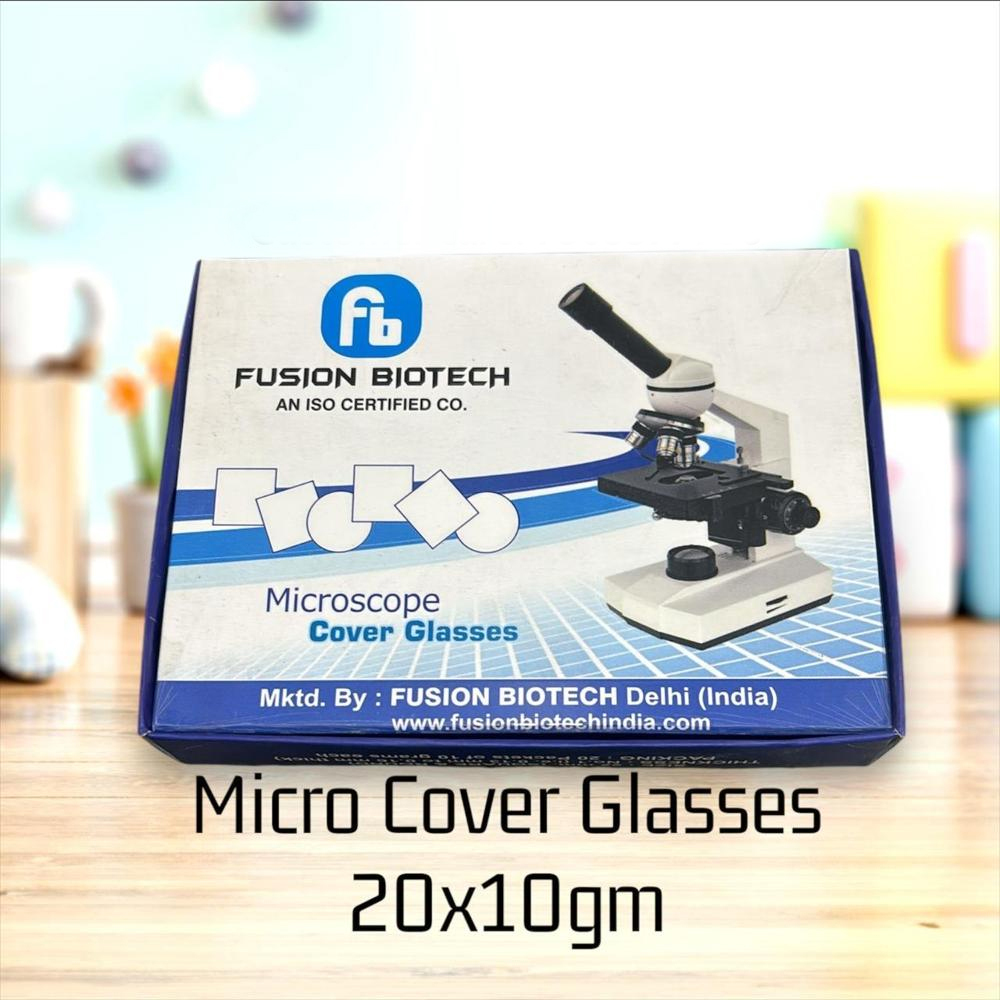
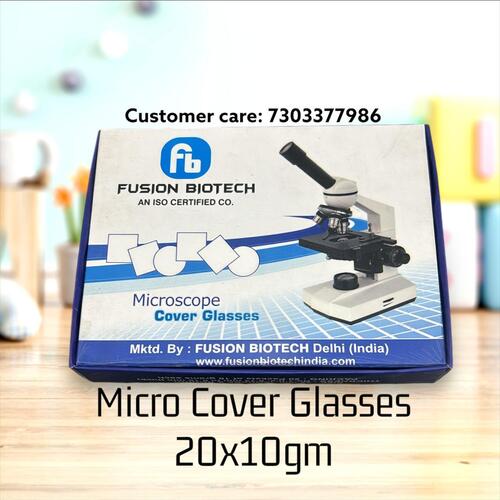
About Microscopic Cover Glass
Specification
|
Material
|
Glass
|
|
Usage/Application
|
Lab
|
|
Shape
|
Rectangle
|
|
Weight
|
10 gm
|
|
Size
|
22 x 40 mm
|
|
Thickness
|
0.17 mm
|
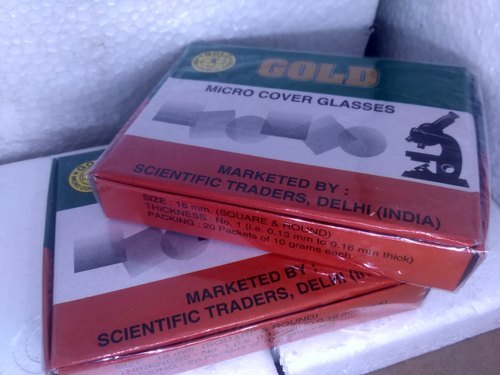
glass cover slip 2240 mm refers to a thin, flat piece of glass used in microscopy to cover specimens placed on a microscope slide.
Specifications
Exceptional Optical Clarity and Chemical ResistanceOur Microscopic Cover Glasses are meticulously crafted from high-grade transparent glass, ensuring excellent visual resolution during specimen analysis. The flat, thin structure provides optimal light transmission, while high chemical resistance makes them suitable for a wide variety of laboratory reagents and applications.
Versatile Applications with Disposable ConvenienceDesigned for use in laboratories, research centers, and educational institutions, these cover glasses offer versatility for multiple standard and specialized microscopy applications. Their disposable nature ensures a contaminant-free environment and minimal cleaning, making them ideal for fast-paced lab workflows.
Safe Packaging and Reliable QualityEach pack contains 100 individually separated pieces to prevent breakage and contamination. Every cover glass is inspected for surface quality to eliminate the presence of any defects, scratches, or bubbles, ensuring consistency and reliability for critical microscopic examinations.
FAQ's of Microscopic Cover Glass:
Q: How do I properly use the Microscopic Cover Glass during specimen preparation?
A: Gently place the cover glass over the prepared specimen on a microscope slide using tweezers, ensuring it lies flat without trapping air bubbles. This protects the specimen and allows for accurate optical examination.
Q: What is the benefit of choosing cover glasses with polished or ground edges?
A: Polished or ground edges provide additional safety by minimizing the risk of cuts or injuries during handling, while also reducing the likelihood of chipping, resulting in better longevity and ease of use.
Q: When should the cover glass be disposed of after use?
A: The Microscopic Cover Glass is intended for single-use applications. Dispose of it safely after specimen observation to prevent cross-contamination between samples and to maintain laboratory hygiene.
Q: Where are these cover glasses typically used?
A: These cover glasses are primarily used in laboratory settings such as research labs, educational institutions, and clinical diagnostic facilities for microscopic examination of specimens.
Q: What makes these cover glasses suitable for high-temperature procedures?
A: Manufactured from heat-resistant glass, these cover glasses can withstand temperatures up to 500C, making them appropriate for various heating and staining procedures commonly used in microscopy.
Q: How does the clear and defect-free surface enhance microscopic examination?
A: The optically clear, defect-free surface eliminates visual distortion, scratches, or bubbles, ensuring unobstructed and precise observation of samples under the microscope.




 Send Inquiry



 Send Inquiry


